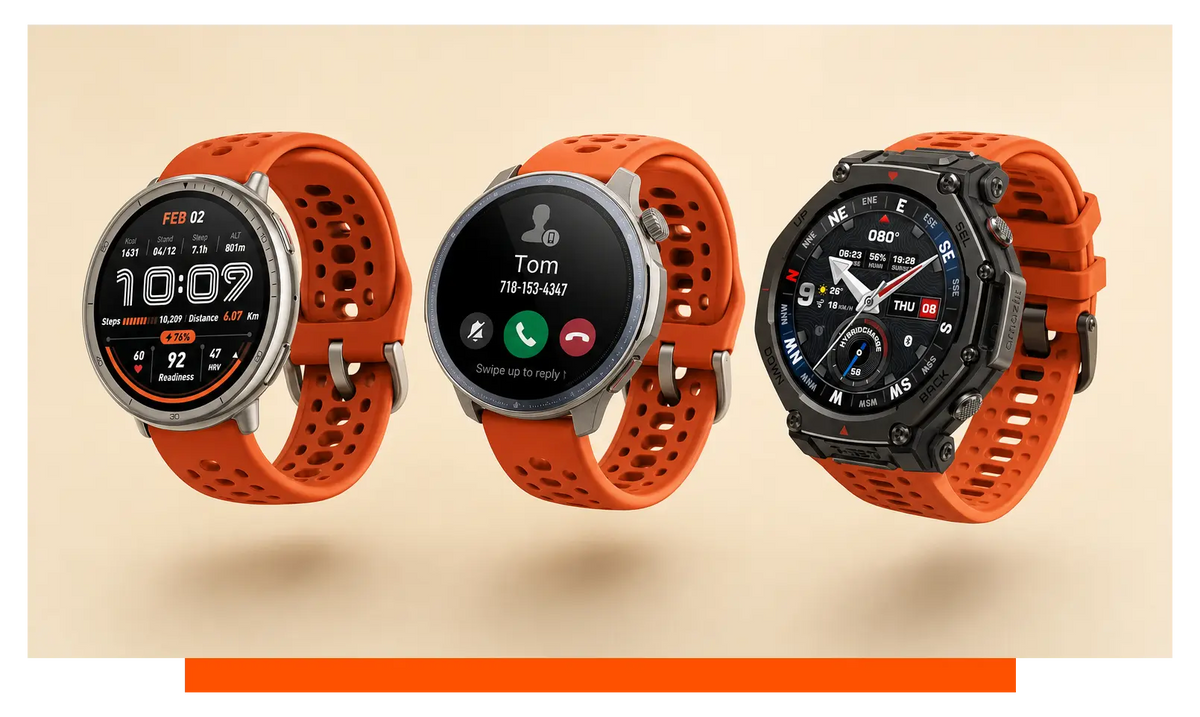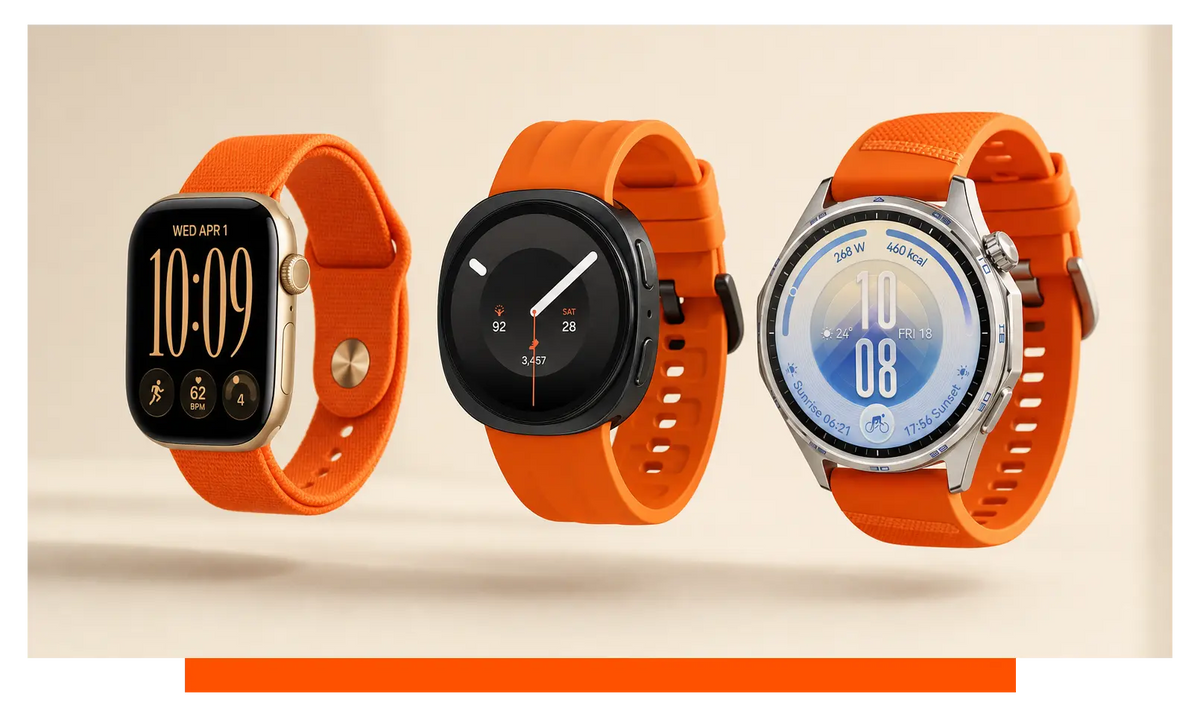
The Apple Watch Series 12 is the best smartwatch for heart patients who use an iPhone, thanks to its ECG, rhythm alerts, shareable ECG PDF and safety tools. Android users should choose the Samsung Galaxy Watch 9, unless longer battery life and overnight consistency matter more, when the Huawei Watch GT 7 is the practical alternative.
On this page
- Best smartwatches for heart patients at a glance
- Which heart-monitoring features actually matter?
- Best for iPhone users - 1. Apple Watch Series 12
- Best for Android users - 2. Samsung Galaxy Watch 9
- Best for multi-week battery - 3. Huawei Watch GT 7
- Best for stress monitoring - 4. Fitbit Sense 2
- Best for X-TAP health checks - 5. Huawei Watch 5
- How to choose a smartwatch for heart monitoring
- Frequently asked questions
Best smartwatches for heart patients at a glance
These are the strongest choices once phone compatibility, rhythm tools, battery life and wearable comfort are considered together.
| Smartwatch | Best for | Deciding spec | Rhythm tool | Phone support | Monitoring battery | Material choice |
|---|---|---|---|---|---|---|
| Apple Watch Series 12 | iPhone users | 24 hours | ECG app | iPhone; enabled countries | Up to 24 hours | Aluminium / titanium / ceramic case |
| Samsung Galaxy Watch 9 | Android users | 445mAh | ECG | Samsung Galaxy phone; Android 12+ | Up to 40 hours | Silicone / nylon / leather / Milanese / metal / titanium straps |
| Huawei Watch GT 7 | Multi-week battery | 21 days | Pulse Wave Arrhythmia Analysis | Android 9.0+ / iOS 13.0+ | Up to 21 days | Stainless-steel case |
| Fitbit Sense 2 | Stress monitoring | 6+ days | ECG | Android 11.0+ / iOS 16.4+ | 6+ days | Aluminium case |
| Huawei Watch 5 | X-TAP health checks | 11 days | ECG | Android 9.0+ / iOS 13.0+ | Up to 11 days | Aerospace-grade titanium / 904L stainless-steel case |
The deciding factor is whether the ECG and irregular-rhythm features work with your existing phone and in your country, followed closely by whether you can wear the watch comfortably enough to capture everyday and overnight patterns.
Which heart-monitoring features actually matter?
Phone-compatible rhythm monitoring, useful records, dependable battery life and a comfortable fit matter more than the longest possible health-feature list.
ECG and irregular-rhythm alerts
A wrist ECG is a single-lead assessment. Where the feature is enabled, it may classify a recording as sinus rhythm or possible atrial fibrillation, while background rhythm notifications can prompt you to take a closer look.
That is useful evidence, not a diagnosis. A normal watch result does not rule out another rhythm problem, and a reading taken between episodes may miss an intermittent problem entirely. Pulse-wave analysis is different again: it looks for possible rhythm risks from the optical signal rather than recording an ECG.
Phone and regional compatibility
The health feature must work with your phone and be enabled where you live, otherwise the watch’s headline ECG specification has little practical value.
Look beyond basic pairing. Some ECG tools require a particular phone brand, operating-system version or companion health app. If your clinician has asked you to capture an episode, the ability to export or share an ECG report can be more useful than several extra wellness metrics.
Battery life for everyday and overnight monitoring
A watch only observes patterns while it is on your wrist, so its charging routine must fit around sleep, work and exercise.
Shorter battery life can work well if you have a dependable daily charging window. Longer endurance is easier when you want continuous daytime and overnight wear, travel frequently or tend to forget chargers. The useful figure is not merely the claimed maximum; it is whether charging creates gaps in the periods your clinician wants you to observe.
Comfort, fit and safety assistance
A stable but non-constricting fit supports cleaner sensor contact and makes consistent wear more realistic.
Case size, weight and thickness all affect overnight comfort, but the strap is just as important. Nylon can feel less sweaty for continuous wear, while leather or metal may suit work and social settings. Silicone is practical for exercise, although anyone who finds it hot or irritating has good reasons to change material.
Emergency SOS, fall detection and similar tools are helpful safeguards when correctly configured, but they are not automatic cardiac diagnosis systems. They should sit alongside the monitoring features, not decide the purchase by themselves.
Best for iPhone users - 1. Apple Watch Series 12
The Apple Watch Series 12 is the most rounded choice for an iPhone user who wants rhythm checks, a shareable record and established safety assistance on the same wrist.
Its ECG app can record a single-lead assessment and classify sinus rhythm or possible AFib where the feature is enabled. You can export an ECG PDF for a clinician, which makes this the clearest choice when sharing a captured episode is part of your care plan.
- Rhythm monitoring: ECG app and irregular-rhythm alerts
- Phone: iPhone
- Battery life: up to 24 hours
- Case sizes: 42mm / 46mm
- Safety: Fall Detection, Emergency SOS and Crash Detection
- Case materials: aluminium, titanium or ceramic
The shorter battery life means you need a regular charging habit, especially if overnight tracking matters. The choice of case size helps with wrist fit, while the available strap range gives you another way to make all-day wear easier: Apple Watch 12 straps include silicone, nylon, leather, Milanese and metal options.
At the time of writing, the Apple Watch Series 12 was listed at £369 for the 42mm case and £419 for the 46mm case.
Who it suits: Choose it if you already use an iPhone and want an ECG PDF you can take into a clinical conversation. If you cannot create a reliable daily charging window, a longer-lasting watch may capture a more consistent record.
Best for Android users - 2. Samsung Galaxy Watch 9
The Samsung Galaxy Watch 9 is the best Android option when you have a compatible Samsung Galaxy phone and want ECG results that can be turned into a shareable PDF.
Compatibility is unusually important here. The ECG requires a Samsung Galaxy phone running Android 12 or later, so owning another Android brand changes the recommendation even if the watch itself appeals to you.
- Rhythm monitoring: ECG and possible AFib alerts where enabled
- Phone requirement: Samsung Galaxy phone with Android 12+
- Battery life: up to 40 hours
- Battery capacity: 390mAh / 445mAh
- Case sizes: 40mm / 44mm
- Weight: 31.5g / 34g
- Thickness: 8.6mm
The relatively slim case is useful if you plan to sleep in it. Strap fit still matters: the verified range of Samsung Galaxy Watch 9 straps spans silicone, nylon, leather, Milanese, metal and titanium, giving sensitive or sweaty wrists several alternatives to the standard workout feel.
At the time of writing, the Samsung Galaxy Watch 9 was listed at £349 for the 40mm case and £379 for the 44mm case.
Who it suits: Pick it if your Samsung phone meets the ECG requirement and you want a lighter, slim watch that is easier to keep on overnight. Android users without a Samsung Galaxy phone should not assume its headline heart features will transfer unchanged.
Best for multi-week battery - 3. Huawei Watch GT 7
The Huawei Watch GT 7 is the practical choice when avoiding charging gaps matters more than taking a wrist ECG.
It uses Pulse Wave Arrhythmia Analysis rather than an ECG. This can provide potential AFib and premature-beat risk alerts, but it does not create the same single-lead electrical recording as the ECG-equipped watches in this shortlist.
- Rhythm monitoring: Pulse Wave Arrhythmia Analysis
- Phone support: Android 9.0+ / iOS 13.0+
- Battery life: up to 21 days
- Case sizes: 41mm / 46mm
- Weight: 36.5g / 51.3g
- Thickness: 9.99mm / 10.95mm
- Case material: stainless steel
The long battery life is the point. It makes continuous daytime and overnight wear easier, although case choice has a noticeable effect: the smaller version is lighter and thinner. Both sizes have silicone, nylon, leather, Milanese and metal strap choices; the available Huawei Watch GT 7 46mm straps are particularly useful if the larger case needs a softer or more breathable fit.
At the time of writing, both Huawei Watch GT 7 case sizes were listed at £279.99.
Who it suits: Choose it if multi-week endurance will keep the watch on your wrist more consistently and you understand that pulse-wave alerts are not an ECG. If your clinician specifically requested a shareable ECG record, choose an ECG-equipped model instead.
Best for stress monitoring - 4. Fitbit Sense 2
The Fitbit Sense 2 suits someone who wants ECG and stress-monitoring tools without committing to daily charging.
Its ECG can flag a rhythm that may be AFib where supported, and results can be shared. It works through the Google Health app on iOS 16.4 or later and Android 11.0 or later, making phone-version checks an essential part of the decision.
- Rhythm monitoring: ECG and possible AFib alerts where enabled
- Phone support: iOS 16.4+ / Android 11.0+
- Battery life: 6+ days
- Case size: 40.5mm
- Case material: aluminium
- Health sensor highlight: cEDA
Its compact case and longer charging interval make it an appealing middle ground for sleep and daytime trends. If silicone becomes sweaty or irritating, Fitbit Sense 2 straps are also available in nylon, leather, Milanese and metal.
At the time of writing, the Fitbit Sense 2 was listed at £219.
Who it suits: It fits readers who want stress context alongside rhythm checks and prefer several days between charges. Confirm app and regional ECG support before treating it as your route to shareable results.
Best for X-TAP health checks - 5. Huawei Watch 5
The Huawei Watch 5 is the strongest Huawei choice when you want an ECG, shareable reports and X-TAP health checks rather than the longest possible battery life.
Its ECG can flag possible AFib where enabled, and reports can be shared from the Huawei Health app. The X-TAP sensor adds another way to initiate health checks, but those readings remain supporting information rather than a diagnosis.
- Rhythm monitoring: ECG and possible AFib alerts where enabled
- Phone support: Android 9.0+ / iOS 13.0+
- Battery life: up to 11 days
- Case sizes: 42mm / 46mm
- Weight: 48g - 63g
- Thickness: 10.5mm / 11.3mm
- Case materials: aerospace-grade titanium / 904L stainless steel
It is heavier than the slimmest choices here, so overnight comfort deserves attention before you settle on a case. The smaller and larger versions both have silicone, nylon, leather, Milanese and metal options; Huawei Watch 5 42mm straps let you tune the lighter case towards exercise, sleep or smarter daily wear.
At the time of writing, both Huawei Watch 5 case sizes were listed at £399.99.
Who it suits: Choose it if you want Huawei’s ECG reports and broader health-check interface with multi-day endurance. For the most comfortable overnight setup, try the smaller case with a breathable strap rather than assuming a looser sensor fit will work.
How to choose a smartwatch for heart monitoring
Your phone, need for a shareable ECG and ability to wear the watch consistently should lead the decision.
- If you use an iPhone and want safety tools plus an exportable ECG: choose the Apple Watch Series 12.
- If you own a compatible Samsung Galaxy phone: choose the Samsung Galaxy Watch 9 for ECG integration and a slim overnight profile.
- If charging gaps are your main concern: choose the Huawei Watch GT 7, provided pulse-wave risk alerts meet your needs and you do not require an ECG.
- If stress context matters alongside ECG: choose the Fitbit Sense 2.
- If you want Huawei ECG reports and X-TAP checks: choose the Huawei Watch 5.
- If your clinician requested a shareable ECG: prioritise a compatible ECG watch over the model with the longest feature list.
- If you need overnight monitoring: favour a manageable case size, a charging routine that avoids sleep and a strap material your skin tolerates.
The Apple Watch Series 12 remains the best match for iPhone users and the Galaxy Watch 9 for compatible Samsung owners, but a comfortable watch you can keep wearing will usually provide a more complete pattern than a feature-rich watch left on its charger.
Frequently asked questions
These answers cover the medical limits and practical steps that sit around smartwatch heart monitoring.
Can a smartwatch diagnose atrial fibrillation or replace a medical ECG?
No. If a watch records a single-lead ECG or flags a rhythm that may be AFib, treat it as useful information to discuss with a clinician, not a diagnosis or replacement for clinical assessment.
Can a smartwatch measure blood pressure accurately enough to manage hypertension?
No. If you monitor hypertension at home, use a validated automatic upper-arm cuff and never change medication because of a watch estimate or notification.
How accurate is wrist heart-rate tracking during exercise?
It is useful for workout trends when the watch has stable skin contact, but motion, activity type, blood flow and individual fit can change accuracy. If you need a precise training reference or have a clinical concern, use an ECG-based chest strap or clinical monitoring.
What should I do if my watch gives me an irregular-rhythm notification?
Save or share the ECG or notification details and arrange clinical follow-up, even if you feel well. If it comes with chest pain, severe shortness of breath, fainting, new weakness or other emergency symptoms, seek emergency help immediately.
Does wearing the watch tighter improve heart-rate and ECG readings?
No. If the signal is inconsistent, wear the watch snugly above the wrist bone so the sensor stays flat against clean skin, but never make it constrictingly tight; sit still with your forearms supported when taking an ECG.