







Best Garmin watches for GPS and navigation

Garmin Fenix 9 is the best Garmin for GPS and navigation overall, especially when you need proper offline maps and long endurance. Choose the Garmin Forerunner 970 instead if you mainly follow planned routes while running and want a lighter watch. The other models suit simpler course or breadcrumb guidance.
On this page
- Garmin GPS watches at a glance
- What makes a good Garmin for GPS navigation
- Best overall - Garmin Fenix 9
- Best for performance runners - Garmin Forerunner 970
- Best for health and lifestyle - Garmin Venu 4
- Best for everyday fitness - Garmin Vivoactive 6
- Best for rugged outdoor use - Garmin Instinct 3
- Which Garmin should you choose?
- Frequently asked questions
Garmin GPS watches at a glance
The Garmin Fenix 9 and Forerunner 970 are the clear choices for full mapping; the remaining watches follow saved courses without displaying offline topographic maps.
| Garmin watch | Best for | Offline maps | Guidance | GNSS modes | GPS runtime | Case and weight | Controls | Made of |
|---|---|---|---|---|---|---|---|---|
| Garmin Forerunner 970 | Marathon training | Yes | Turn-by-turn navigation | SatIQ; All + Multi-Band | Up to 21 hours in All + Multi-Band | 47 mm; 56 g | AMOLED touchscreen; 5 buttons | Fibre-reinforced polymer; titanium bezel |
| Garmin Fenix 9 | Multiday expeditions | Yes | Turn-by-turn navigation | SatIQ; Multi-band | 43 mm: 18 hours; 47 mm: 30 hours; 51 mm: 54 hours | 43 mm; 47 mm; 51 mm | AMOLED touchscreen; 5 buttons | Titanium bezel |
| Garmin Venu 4 | Health and lifestyle | No | Courses | SatIQ; Multi-band | 41 mm: 12 hours; 45 mm: 17 hours in multi-band | 41/45 mm; 46/56 g | AMOLED touchscreen; 3 buttons | Stainless steel |
| Garmin Vivoactive 6 | Everyday fitness | No | Courses | GPS only; All Systems | Up to 17 hours in All Systems | 42.2 mm; 36 g | AMOLED touchscreen; 2 buttons | Fibre-reinforced polymer |
| Garmin Instinct 3 | Rugged outdoors | No | Courses; TracBack | SatIQ; All Satellite Systems + Multi-Band | AMOLED: 23/30 hours; solar: 24/34 hours in multi-band | 45/50 mm | AMOLED: 5 buttons | Fibre-reinforced polymer; aluminium bezel |
The deciding point: choose according to whether you need proper on-watch maps for self-reliant navigation or only a line and prompts along a route you planned earlier.
What makes a good Garmin for GPS navigation
A good navigation watch combines the right type of map guidance with accurate positioning, enough GPS endurance for your longest outing and a fit you can tolerate for the whole route.
Offline maps versus course guidance
Offline maps show surrounding roads, paths and terrain on your wrist, rather than displaying only the course line. That context matters at an unfamiliar junction: you can see where alternative paths lead and make a considered choice without reaching for your phone.
Course guidance is simpler. You load a route, follow its line and receive prompts when supported. It works well for races, familiar trails and planned rides, but it gives you less context when several paths cross or your plans change.
Multi-band GPS and SatIQ
Multi-band positioning listens across more than one satellite frequency, helping the watch place you more accurately around steep ground, trees and tall buildings. On the wrist, that can mean fewer cut corners and less chance of the route line appearing on the wrong nearby path.
SatIQ automatically selects the satellite mode needed for the conditions. The practical benefit is balance: you can gain stronger positioning where reception is difficult without keeping the most power-hungry mode active throughout every open stretch.
GPS runtime
Navigation endurance should cover your moving time, stops and a sensible delay margin. Normal smartwatch battery life is not the useful measure here; continuous satellite tracking and map use draw considerably more power.
Pay attention to the mode attached to each claim. GPS-only figures are generally longer, while multi-band or maximum-accuracy modes better reflect demanding navigation in awkward terrain.
Fit, screen and physical controls
A bigger screen makes junctions easier to read, but a larger case can feel more imposing during a long run or on a smaller wrist. Weight matters too. A watch that shifts as your arms move is distracting, and overtightening the strap to stop it can become uncomfortable.
Touchscreens are handy for inspecting a map while stationary. Buttons remain useful in rain, with gloves or when your hands are sweaty. Strap width also affects the feel: a wider band can stabilise a substantial outdoor watch, while a lighter case and narrower fitting usually disappear more easily during everyday wear.
Best overall - Garmin Fenix 9
The Garmin Fenix 9 is the best overall choice because its routable maps, downloadable TopoActive mapping and long activity runtimes support navigation when the route itself is uncertain.
It is the watch to take into an unfamiliar trail network or on a long day where a breadcrumb line alone would not give you enough context. Turn-by-turn navigation helps on planned routes, while the map lets you inspect nearby paths when you need to alter that plan.
- Normal activity mode: up to 18 hours for the 43 mm case, 30 hours for the 47 mm case and 54 hours for the 51 mm case.
- Max Accuracy mode: up to 15 hours, 25 hours and 45 hours respectively.
- Navigation: downloadable TopoActive maps, routable mapping and turn-by-turn guidance.
- Operation: AMOLED touchscreen and 5 physical buttons.
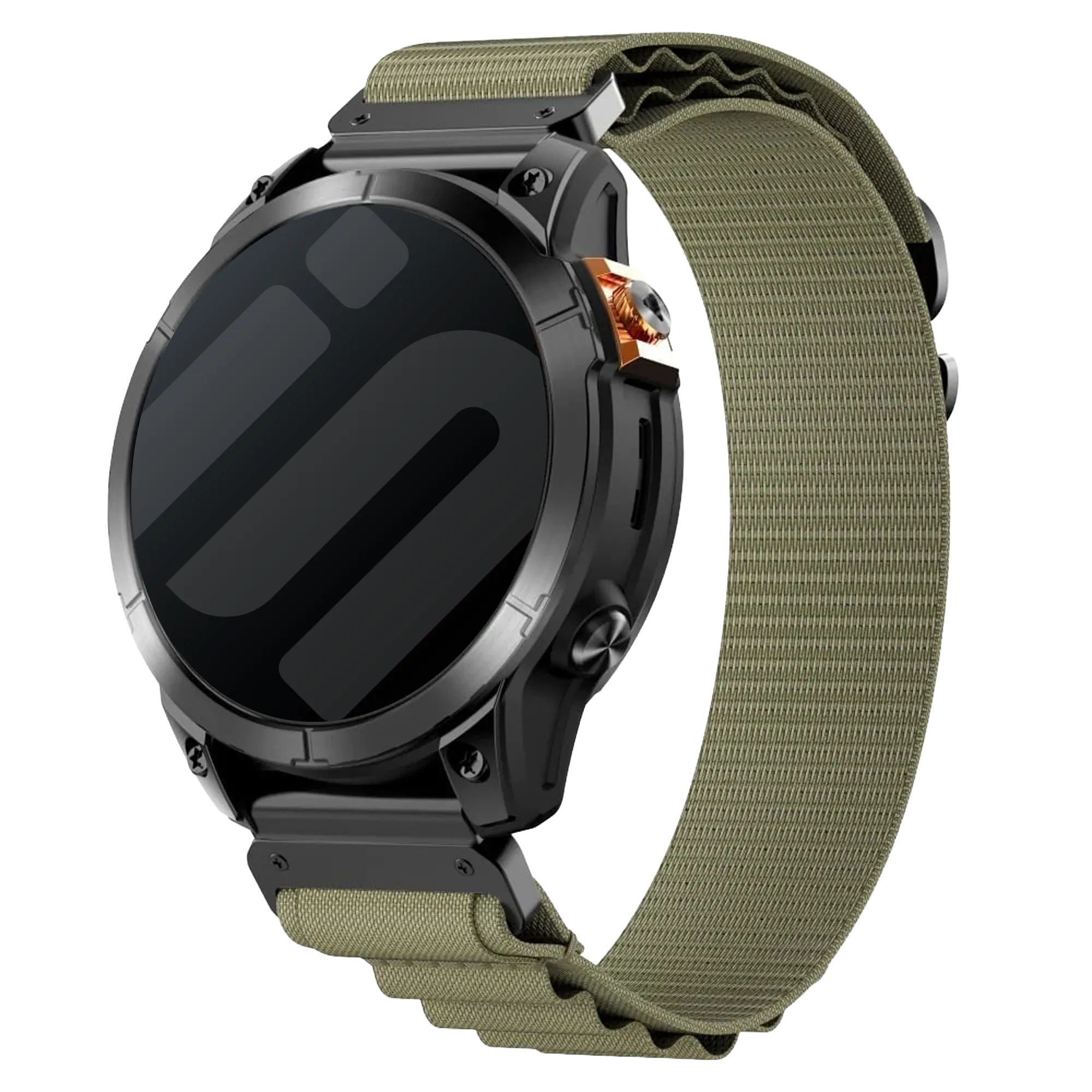
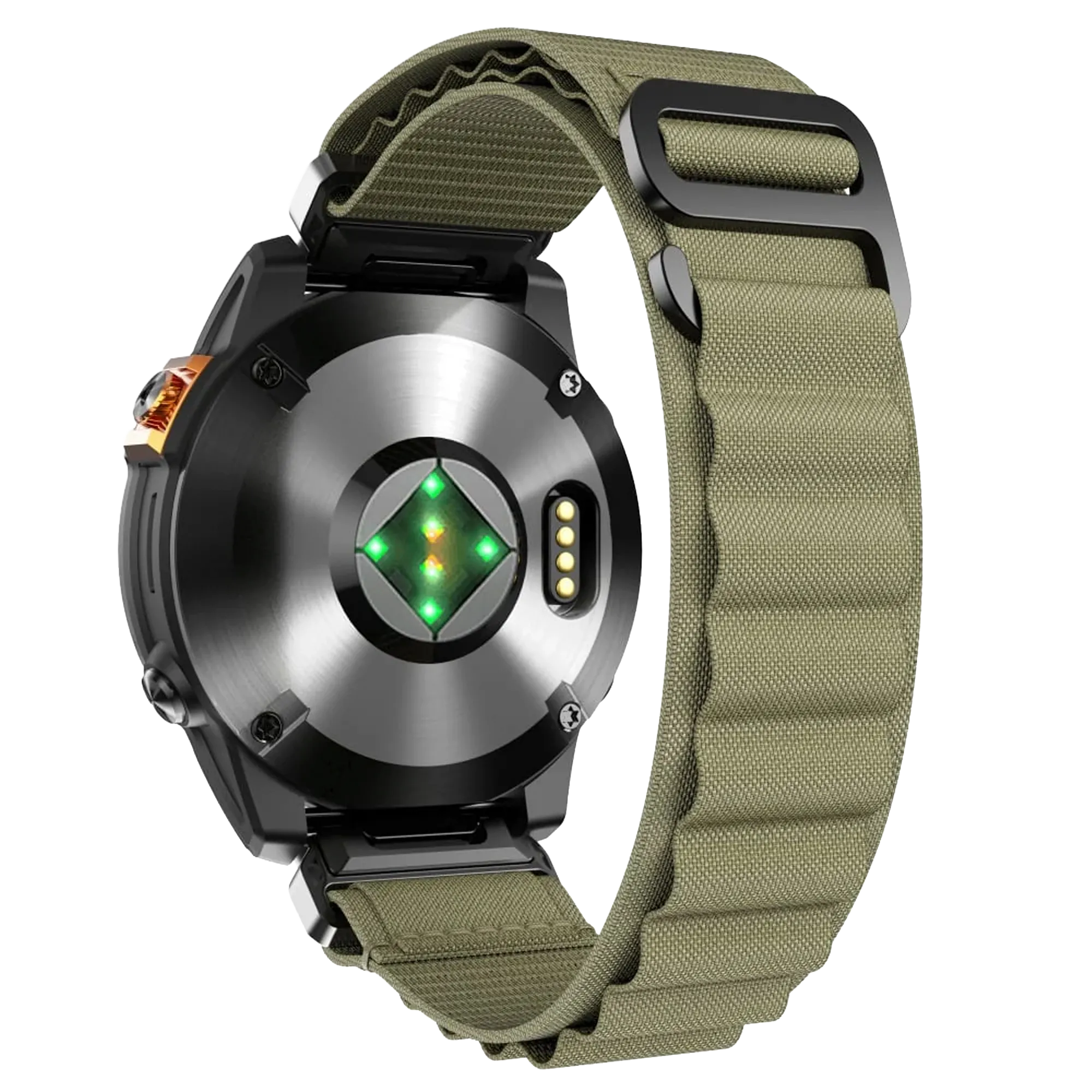
Case choice changes both endurance and wrist presence. The 43 mm case takes 20 mm straps, the 47 mm uses 22 mm straps and the 51 mm requires 26 mm straps. That is worth checking before reusing an existing band. Silicone, nylon, leather, milanese and metal Garmin Fenix 9 straps are available for every model from this series.
At the time of writing, the Garmin Fenix 9 costs £859.99 in 43 mm, £859.99 in 47 mm and £949.99 in 51 mm. It suits you if maps and endurance come before low weight; the smaller versions make sense when the largest case would feel too dominant.
Best for performance runners - Garmin Forerunner 970
The Garmin Forerunner 970 is the better route-following choice for performance runners because it combines full-colour maps and turn-by-turn guidance with a lighter running-focused design.
You still get the important navigation tools: offline mapping, SatIQ and an All + Multi-Band mode for difficult reception. Its GPS-only runtime reaches up to 26 hours, while All + Multi-Band lasts up to 21 hours. That covers long races and training routes, although the larger Fenix versions leave more headroom for multiday outings.
- Case: 47 mm.
- Weight: 56 g.
- Navigation: full-colour maps and turn-by-turn course guidance.
- Controls: AMOLED touchscreen and 5 buttons.
The standard 22 mm fitting is straightforward, and silicone, nylon, leather, milanese and metal Garmin Forerunner 970 straps are available. A soft nylon option can reduce pressure during long runs; silicone is the practical choice when sweat and frequent rinsing matter more.
The Garmin Forerunner 970 costs £629.99 at the time of writing. Pick it over the Fenix 9 when you want proper maps but care more about running feel and performance training than maximum navigation endurance.
Best for health and lifestyle - Garmin Venu 4
The Garmin Venu 4 is the navigation choice for health-focused users who follow prepared courses and value a smaller, less outdoorsy watch more than offline maps.
It supports courses, SatIQ and multi-band positioning, but it does not store the full offline maps offered by the leading pair. You can follow a planned line; you cannot inspect a topographic map when an unfamiliar trail splits unexpectedly. That distinction should decide whether its lifestyle features are enough for you.
The 41 mm version weighs 46 g and runs for up to 12 hours in multi-band mode. The 45 mm version weighs 56 g and reaches up to 17 hours. Both use an AMOLED touchscreen with 3 buttons, giving you a bright everyday display without removing physical input entirely.
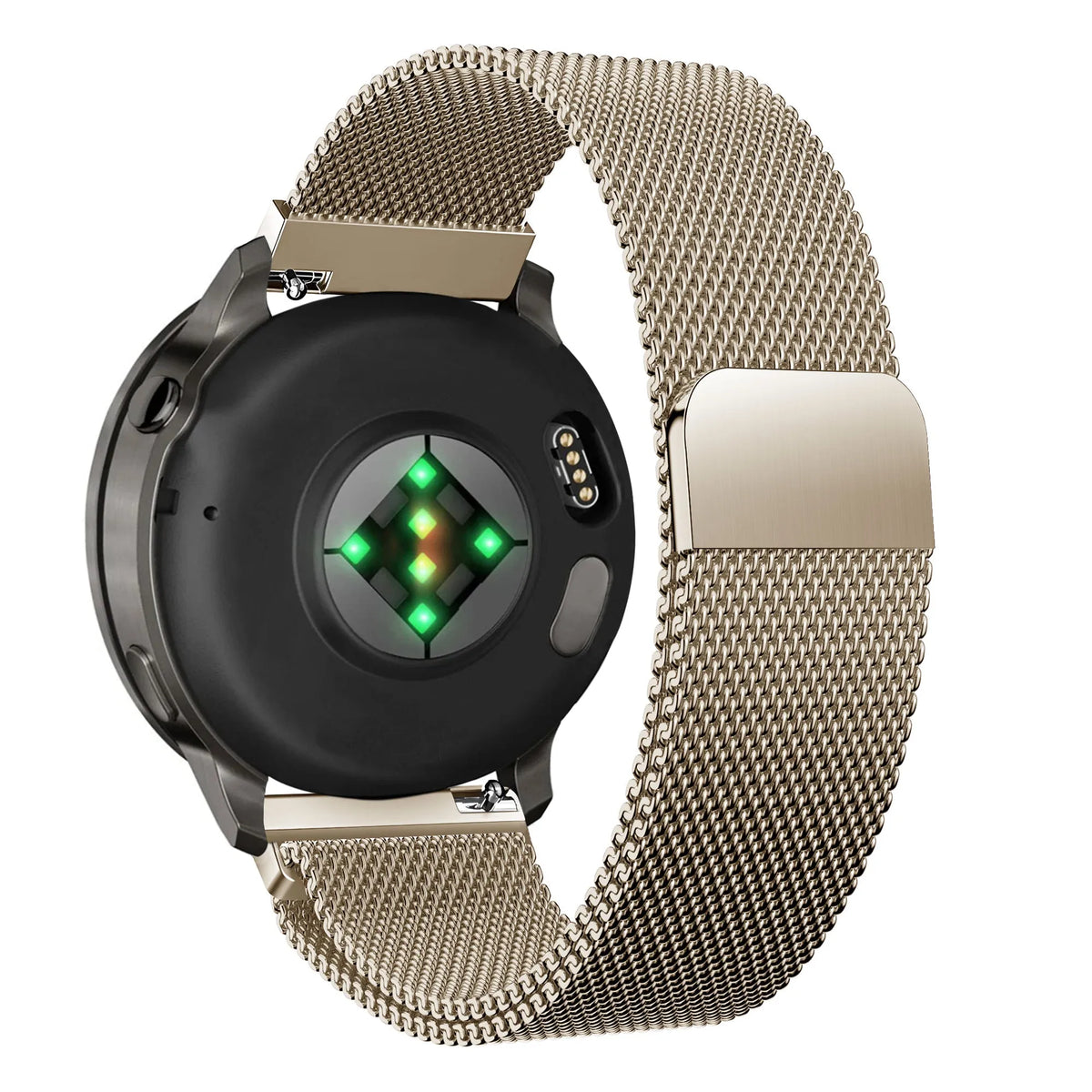
Fit is a genuine advantage. The 41 mm case accepts 18 mm quick-release bands, while the 45 mm takes 22 mm quick-release bands. Silicone, nylon, leather, milanese and metal Garmin Venu 4 - 41mm straps are available for the smaller model, which makes it easier to keep the watch visually light as well as physically compact.
At the time of writing, the Garmin Venu 4 costs £439.99 in 41 mm and £439.99 in 45 mm. Choose it for planned recreational routes and daily health tracking, not self-reliant map navigation.
Best for everyday fitness - Garmin Vivoactive 6
The Garmin Vivoactive 6 is the most approachable option for everyday fitness because it offers course following in a light case without asking you to wear a substantial outdoor watch.
It provides GPS-only and All Systems tracking rather than multi-band positioning, and it has no offline map capability. Its All Systems runtime reaches up to 17 hours. That is useful for walks, runs and rides on routes you prepared beforehand, but it is not the right tool for interpreting a complicated network of unmarked paths.
- Case: 42.2 mm.
- Weight: 36 g.
- Guidance: saved courses.
- Controls: AMOLED touchscreen and 2 buttons.
The 20 mm quick-release fitting gives you plenty of flexibility. Silicone, nylon, leather, milanese and metal Garmin Vivoactive 6 straps are available; nylon keeps the already light watch comfortable for long days, while leather or milanese makes more sense when the same watch goes to work afterwards.
The Garmin Vivoactive 6 costs £269.99 at the time of writing. It suits you if low weight and everyday usefulness matter more than detailed maps or the strongest available GNSS mode.
Best for rugged outdoor use - Garmin Instinct 3
The Garmin Instinct 3 is the rugged choice when durability, strong satellite modes and TracBack matter more than seeing full maps on your wrist.
Its 10 ATM water rating and physical-button interface suit wet, dirty or gloved conditions. Courses show the route to follow, while TracBack supports retracing a recorded path. There are no offline maps, however, so the watch cannot give the same junction context as the Fenix 9 or Forerunner 970.
In multi-band mode, the AMOLED version lasts up to 23 hours in 45 mm and 30 hours in 50 mm. The solar version reaches up to 24 hours and 34 hours respectively before any solar gain. Those figures make it attractive for long outdoor sessions where breadcrumb-style guidance is sufficient.
Sizing affects the whole setup: the 45 mm case uses 22 mm bands, while the 50 mm case uses 26 mm bands. Silicone, nylon, leather, milanese, metal and titanium Garmin Instinct 3 - 45mm straps are available. Nylon can make the rugged case feel less rigid during long wear; titanium gives it a more substantial everyday finish.
At the time of writing, the Garmin Instinct 3 costs £389.99 in 45 mm and £429.99 in 50 mm. It is a strong fit for rough use, but not a lower-cost substitute for a mapped navigation watch.
Which Garmin should you choose?
Choose by matching the watch’s navigation type and wrist fit to the hardest route you genuinely expect to tackle.
- If you explore unfamiliar trails or need the longest mapped endurance: choose Garmin Fenix 9, particularly the 51 mm version when runtime outweighs case size.
- If you run or race on planned routes and still want full maps: choose Garmin Forerunner 970 for its lighter running-focused build.
- If health tracking and a smaller case matter most: choose Garmin Venu 4, provided course guidance is enough.
- If you want a light everyday fitness watch: choose Garmin Vivoactive 6 for prepared routes rather than remote route finding.
- If you need a rugged watch for rough conditions: choose Garmin Instinct 3 when TracBack and breadcrumb guidance cover your needs.
Full offline mapping is the dividing line. If you need to understand the terrain around your route without relying on your phone, the Fenix 9 remains the strongest overall option; if your route is already settled and running comfort comes first, the Forerunner 970 is the sharper fit.
Goes with this article
3 for 2 on all strapsGarmin Forerunner 970 straps
View all



Garmin Venu 4 - 41mm straps
View all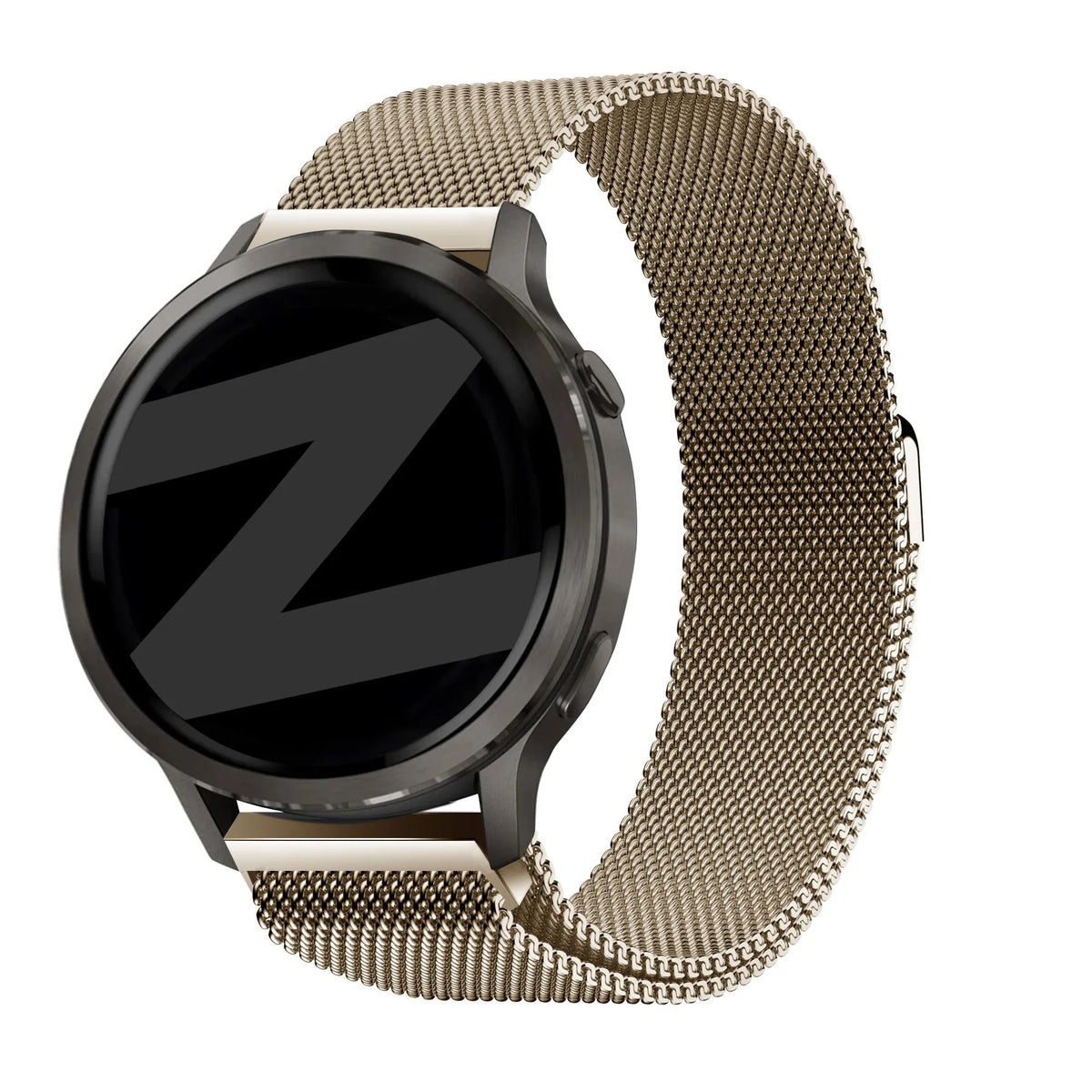


Frequently asked questions
Can I load Komoot, Strava or Garmin Connect routes onto these watches?
Yes. Garmin Connect courses can be sent to compatible watches, Komoot tours can sync through Garmin Connect, and starred Strava routes can sync once the relevant accounts are linked.
Do Garmin watches reroute automatically when I take a wrong turn?
It depends on the route type. A course using routable maps and Roads & Trails can recalculate from your current location, while a direct-path or breadcrumb track normally issues an off-course alert without changing the original line.
Can I use Garmin navigation abroad without mobile signal?
Yes, provided you download the required maps or sync the course before leaving coverage. The saved navigation works without a mobile signal or active phone connection.
Do I need Garmin Outdoor Maps+ for hiking navigation?
No. Garmin Fenix 9 and Garmin Forerunner 970 can use downloadable TopoActive maps without Outdoor Maps+; the subscription supplies extra premium map content.
Can I send a location or waypoint from my phone to the watch?
Yes, when a course-compatible Garmin watch is paired with an iPhone. Share the Apple Maps location through Garmin Connect and the watch can save it as a destination.
 Our strap expert
Jeffrey van BattumCEO & smartwatch strap specialist at Smartwatch-straps.co.ukMeet Jeffrey
 Buying guide
 Buying guide
 Buying guide


