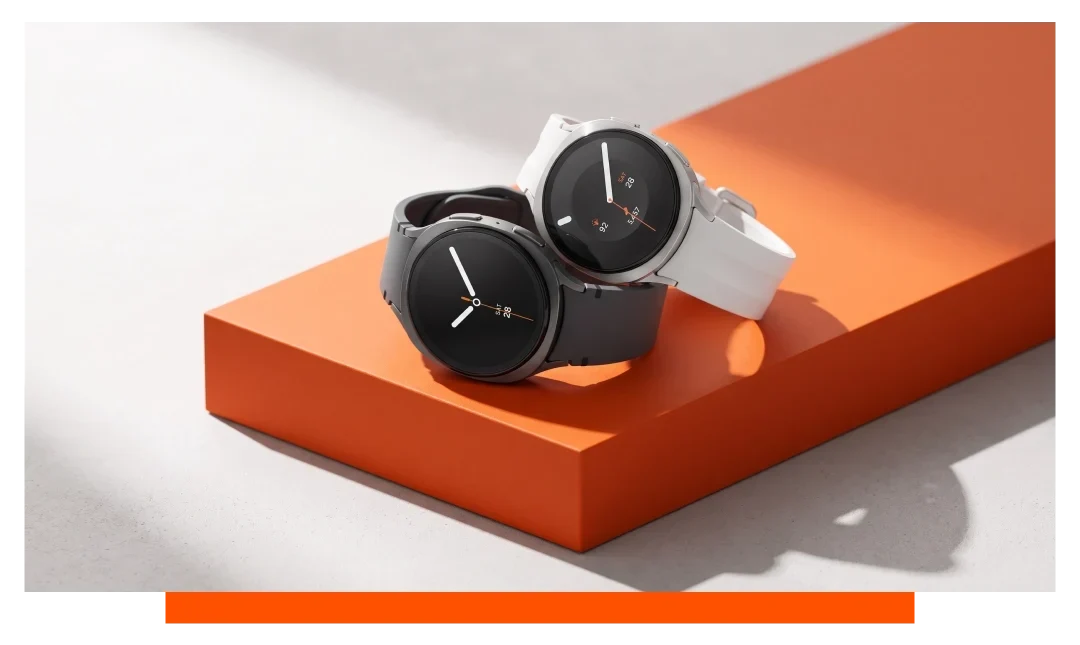
Galaxy Watch 9 vs Galaxy Watch 8: Full Comparison
Samsung continues to strengthen its position in the smartwatch market. With the introduction of the Galaxy Watch 9, the brand has launched the successor to the popular Galaxy Watch 8. At first glance, both models look very similar: the same recognisable round design, the same choice of compact and larger sizes, and a similar focus on health and fitness features.
However, there are several important differences. The Galaxy Watch 9 introduces improvements in performance, energy efficiency, smart features and health insights. Particularly the updated hardware and expanded AI integration are designed to help Samsung take another step forward within the Wear OS segment.
But does this automatically mean that the Galaxy Watch 9 is the better choice? Not necessarily. The Galaxy Watch 8 remains a highly capable smartwatch and could actually become more attractive thanks to a lower price, especially for users who are simply looking for a reliable Samsung smartwatch.
In this detailed comparison, we put the Galaxy Watch 9 against the Galaxy Watch 8. We compare all available versions, including the 40 mm and 44 mm models as well as the Galaxy Watch 8 Classic, and look at each category to determine which smartwatch is the best choice.
Galaxy Watch 9 vs Galaxy Watch 8: at a glance
The Galaxy Watch 9 is the most complete and future-proof Samsung smartwatch thanks to its newer hardware, improved AI features and further optimisation of health tracking. However, the Galaxy Watch 8 remains an interesting option when available at a lower price, as the overall user experience remains largely similar.
Galaxy Watch 9 vs Galaxy Watch 8: Specifications overview
| Specification | Galaxy Watch 9 40 mm | Galaxy Watch 9 44 mm | Galaxy Watch 8 40 mm | Galaxy Watch 8 44 mm | Galaxy Watch 8 Classic |
|---|---|---|---|---|---|
| Available sizes | 40 mm | 44 mm | 40 mm | 44 mm | 46 mm |
| Display | Super AMOLED | Super AMOLED | Super AMOLED | Super AMOLED | Super AMOLED |
| Processor | Snapdragon Wear Elite | Snapdragon Wear Elite | Exynos W1000 | Exynos W1000 | Exynos W1000 |
| RAM | 2 GB | 2 GB | 2 GB | 2 GB | 2 GB |
| Storage | 32 GB | 32 GB | 32 GB | 32 GB | 32 GB |
| Battery | 390 mAh | 445 mAh | 325 mAh | 435 mAh | 445 mAh |
| GPS | Dual-band GPS | Dual-band GPS | Dual-band GPS | Dual-band GPS | Dual-band GPS |
| Water resistance | 5 ATM + IP68 | 5 ATM + IP68 | 5 ATM + IP68 | 5 ATM + IP68 | 5 ATM + IP68 |
| Software | Wear OS + One UI Watch | Wear OS + One UI Watch | Wear OS + One UI Watch | Wear OS + One UI Watch | Wear OS + One UI Watch |
| AI features | Advanced | Advanced | Basic | Basic | Basic |
Display: Galaxy Watch 9 vs Galaxy Watch 8
When it comes to the display, the differences between the Galaxy Watch 9 and Galaxy Watch 8 are limited. Both models use a high-quality Super AMOLED display with excellent brightness, deep blacks and Always-On Display support. With the Galaxy Watch 9, Samsung has focused mainly on optimisation and energy efficiency rather than introducing a completely new screen.
Galaxy Watch 9 display
The Galaxy Watch 9 is available in two sizes:
- 40 mm
- 44 mm
The 40 mm version features a more compact display, aimed at users with smaller wrists or those who prefer a more subtle smartwatch design. The 44 mm version offers more screen space, which is particularly useful for:
- reading notifications;
- navigation;
- viewing workout data;
- controlling apps.
Both versions use a Super AMOLED display with high brightness, ensuring the screen remains clearly visible outdoors. This is especially beneficial when exercising in direct sunlight.
The Galaxy Watch 9 also supports:
- Always-On Display;
- automatic brightness adjustment;
- customisable watch faces;
- touchscreen controls.
Galaxy Watch 8 display
The Galaxy Watch 8 also uses a Super AMOLED display and is available in:
- 40 mm
- 44 mm
- Classic (46 mm)
The Classic version stands out thanks to its larger display and more traditional watch experience. Thanks to the physical rotating bezel, this model offers a different way of navigating compared with the standard versions.
For users who prefer the look and feel of a traditional watch, the Galaxy Watch 8 Classic remains an appealing option.
Differences in everyday use
Although the display technology is largely the same, there are some practical differences.
Galaxy Watch 9 advantages
✅ Improved display optimisation
✅ Potentially better energy efficiency
✅ Better integration with newer hardware
Galaxy Watch 8 advantages
✅ Galaxy Watch 8 Classic offers a larger 46 mm option
✅ Rotating bezel available
✅ Display quality remains excellent
For everyday tasks such as:
- reading WhatsApp messages;
- starting workouts;
- controlling music;
- checking notifications;
the difference between both models will barely be noticeable.
Design: Galaxy Watch 9 vs Galaxy Watch 8
Samsung has chosen to refine the existing design with the Galaxy Watch 9. The smartwatch feels familiar and retains the recognisable Galaxy Watch appearance. The biggest differences are not found in the design itself, but mainly in the available versions.
Galaxy Watch 9 design
The Galaxy Watch 9 follows the modern, minimalist design language of the previous generation.
Available sizes:
Galaxy Watch 9 40 mm
Ideal for:
- smaller wrists;
- users who want a lightweight smartwatch;
- everyday use without a bulky watch feel.
Galaxy Watch 9 44 mm
Ideal for:
- larger wrists;
- athletes;
- users who want to see more information on the display.
Samsung once again uses high-quality materials with a premium finish. The smartwatch is designed to work equally well with sportswear and more formal clothing.
Galaxy Watch 8 design
The Galaxy Watch 8 has the same two standard sizes:
- 40 mm
- 44 mm
In addition, there is the:
Galaxy Watch 8 Classic
This model is aimed at users who prefer a more traditional watch appearance.
Key differences:
- larger 46 mm case;
- classic watch-inspired design;
- physical rotating bezel.
The bezel is an important feature for many Samsung fans. It not only gives the watch a more premium appearance but also makes navigation easier, especially during workouts or when wearing gloves.
Battery life: Galaxy Watch 9 vs Galaxy Watch 8
Battery life is one of the areas where the Galaxy Watch 9 offers a noticeable improvement. Thanks to more efficient hardware and further optimisation, the newer model is able to get more out of the same smartwatch experience.
Galaxy Watch 9 battery
The Galaxy Watch 9 uses:
- 40 mm: 390 mAh
- 44 mm: 445 mAh
Battery life depends heavily on how you use the smartwatch.
Factors that influence battery performance include:
- Always-On Display;
- GPS usage;
- heart rate monitoring;
- sleep tracking;
- notifications;
- workout activities.
For most users, this means the Galaxy Watch 9 can comfortably last a full day and often longer depending on usage.
Galaxy Watch 8 battery
The Galaxy Watch 8 features:
- 40 mm: 325 mAh
- 44 mm: 435 mAh
- Classic: 445 mAh
The differences are most noticeable with the smaller model. The Galaxy Watch 9 receives a larger battery in this version, making the compact model more appealing for users with more demanding usage habits.
In everyday use
| Usage | Best choice |
|---|---|
| Only notifications and checking the time | Both |
| Lots of GPS-based workouts | Galaxy Watch 9 44 mm |
| Sleep tracking | Galaxy Watch 9 44 mm |
| Always-On Display | Galaxy Watch 9 44 mm |
| Maximum battery life | Galaxy Watch 9 44 mm |
Processor & performance
The biggest hardware change in the Galaxy Watch 9 can be found under the hood. Samsung has moved away from the previous generation chipset and introduced a newer, more powerful processor. This allows the Galaxy Watch 9 to respond faster, improve energy efficiency and be better prepared for future AI-powered features.
Galaxy Watch 9: next-generation hardware
The Galaxy Watch 9 uses the newer Snapdragon Wear Elite chipset, while the Galaxy Watch 8 uses the Exynos W1000 processor.
The new chipset brings several advantages:
- faster app launches;
- smoother animations;
- improved energy efficiency;
- faster processing of health data;
- more possibilities for AI features.
In everyday use, these improvements are most noticeable when multiple functions are running at the same time:
- starting a workout while GPS is activated;
- using navigation;
- processing notifications;
- performing health measurements;
- switching between apps.
A smartwatch does not need to be a powerful computer, but a smooth user experience does create a more premium feel.
Galaxy Watch 8: still powerful performance
The Galaxy Watch 8 is certainly not slow. The Exynos W1000 is still a capable smartwatch processor that handles:
- running apps;
- tracking workouts;
- processing notifications;
- performing health measurements.
For most everyday users, the difference between both models will not immediately feel dramatic.
If you mainly:
- check the time;
- read notifications;
- track steps;
- exercise occasionally;
the Galaxy Watch 8 will still provide an excellent experience for years to come.
Difference in everyday use
| Usage | Best choice |
|---|---|
| Daily notifications | Draw |
| Using lots of apps | Galaxy Watch 9 |
| AI features | Galaxy Watch 9 |
| Long-term software support | Galaxy Watch 9 |
| Data-heavy workouts | Galaxy Watch 9 |
The biggest advantage is therefore not just speed, but future-proofing.
Modern smartwatches are becoming increasingly focused on health tracking and AI-powered features. A more powerful processor helps ensure that new features can continue to be supported for longer.
Sensors
Samsung has equipped both smartwatches with an extensive range of sensors. The Galaxy Watch 9 builds on this foundation and uses improved algorithms to interpret health data more accurately.
Galaxy Watch 9 sensors
The Galaxy Watch 9 features a comprehensive sensor package:
- optical heart rate sensor;
- electrical heart sensor (ECG);
- bioelectrical impedance analysis (BIA);
- temperature sensor;
- accelerometer;
- gyroscope;
- barometer;
- ambient light sensor;
- GPS.
This combination enables features such as:
- heart rate monitoring;
- ECG measurements;
- body composition analysis;
- sleep tracking;
- stress monitoring;
- fall detection;
- automatic workout detection.
Galaxy Watch 8 sensors
The Galaxy Watch 8 offers almost the same sensor foundation:
- heart rate monitoring;
- ECG;
- BIA;
- temperature measurement;
- GPS;
- motion sensors.
This means the Watch 8 remains a very complete health and fitness smartwatch.
The main difference lies in how Samsung processes the collected data. Newer software and more powerful hardware allow the Galaxy Watch 9 to identify patterns and provide more advanced insights.
Health features
Health has become one of Samsung’s biggest focus areas in recent years. Both models are capable of tracking a wide range of measurements, but the Galaxy Watch 9 adds new insights that go beyond simply displaying individual data points.
Heart health
Both models can:
- continuously monitor heart rate;
- detect irregular heart rhythms;
- perform ECG measurements.
The Galaxy Watch 9 uses newer hardware to process this data faster and combine it more effectively with other health information.
Sleep tracking
Samsung has invested heavily in sleep features over the past few years.
Both models offer:
- sleep duration tracking;
- sleep stages;
- sleep score;
- snore detection;
- Sleep Coaching.
The Galaxy Watch 9 adds improved analysis and deeper insights.
For users who wear their smartwatch overnight, the improved battery life is also an important advantage. A smartwatch that lasts longer makes it easier to consistently collect sleep data.
Body composition
Thanks to the BIA sensor, both models can provide insights into:
- body fat percentage;
- muscle mass;
- body water;
- BMI.
This feature remains particularly useful for athletes and users who want to monitor their health progress over a longer period.
New health insights on the Galaxy Watch 9
Where Samsung takes a step forward with the Galaxy Watch 9 is in how health data is interpreted.
The smartwatch no longer focuses only on individual measurements, but attempts to identify connections between:
- sleep;
- activity;
- heart rate;
- recovery;
- daily workload.
This makes the smartwatch feel more like a personal health coach rather than simply a device that collects measurements.
AI features: Galaxy Watch 9 vs Galaxy Watch 8
AI is one of the biggest new areas of focus for the Galaxy Watch 9. Samsung uses artificial intelligence to analyse information more intelligently and make interaction feel more natural.
Galaxy AI and Gemini integration
The Galaxy Watch 9 receives broader support for AI-powered features.
Examples include:
- more natural voice control;
- smarter replies;
- contextual suggestions;
- improved integration with Samsung smartphones.
Thanks to Gemini integration, the smartwatch can handle more complex requests.
Examples include:
- summarising a message;
- creating a reminder;
- requesting information;
- completing actions without needing to pick up your phone.
Galaxy Watch 8 AI features
The Galaxy Watch 8 also supports smart features through Wear OS, but it does not offer the same new AI capabilities.
For users who rarely use AI features, the difference will be less noticeable.
However, for those who want to use their smartwatch increasingly as a personal assistant, the Galaxy Watch 9 is clearly the more attractive option.
Sports features
Both the Galaxy Watch 9 and Galaxy Watch 8 are excellent fitness watches for everyday athletes. Both models offer extensive workout tracking, GPS, heart rate monitoring and automatic recognition of different activities. The Galaxy Watch 9 mainly benefits from newer hardware and smarter analysis of workout and recovery data.
Galaxy Watch 9 as a fitness watch
Samsung is increasingly focusing the Galaxy Watch 9 on users who want to actively track their health and performance.
The smartwatch supports activities including:
- running;
- walking;
- cycling;
- swimming;
- strength training;
- interval training;
- fitness activities;
- outdoor activities.
Thanks to built-in GPS, routes can be tracked independently without a smartphone.
For runners and cyclists, these features are particularly useful:
- distance tracking;
- pace;
- heart rate zones;
- calorie burn;
- training load;
- recovery information.
Improved workout insights
Where the Galaxy Watch 9 moves forward is in how it interprets collected data.
Instead of only showing numbers, Samsung aims to provide more context:
- Was your workout harder than usual?
- Have you recovered sufficiently?
- How does your activity compare with previous days?
- Is your daily workload balanced?
This turns the smartwatch into more of a coach that helps users make better decisions.
Galaxy Watch 8 as a fitness watch
The Galaxy Watch 8 remains a highly capable fitness smartwatch.
For most users, it offers everything they need:
✅ Accurate heart rate monitoring
✅ GPS tracking
✅ Automatic workout detection
✅ Sleep and recovery measurements
✅ Extensive Samsung Health integration
If you mainly exercise a few times per week, go walking regularly or simply want to monitor your general health, the Watch 8 remains an excellent choice.
Which athlete should choose which model?
| User type | Best choice |
|---|---|
| Casual athlete | Galaxy Watch 8 |
| Serious athlete | Galaxy Watch 9 |
| Runner | Galaxy Watch 9 |
| Health monitoring | Galaxy Watch 9 |
| Basic fitness tracking | Both |
Smartwatch features: Galaxy Watch 9 vs Galaxy Watch 8
When it comes to smartwatch functionality, both models are highly capable. They run on Wear OS and provide access to apps, notifications, payments and smart features. The Galaxy Watch 9 has an advantage thanks to newer software capabilities and improved AI integration.
Wear OS experience
Both models offer:
- receiving notifications;
- replying to messages;
- making calls from the smartwatch;
- controlling music;
- installing apps;
- using navigation;
- contactless payments;
- Google services.
The experience is therefore similar to having a small smartphone on your wrist.
Apps and ecosystem
The Galaxy Watch series works best when paired with Samsung Galaxy smartphones.
You get access to:
- Samsung Health;
- Samsung Wallet;
- Galaxy Wearable app;
- Google Maps;
- Google Assistant/Gemini;
- WhatsApp;
- Spotify and other popular apps.
For Android users, this remains one of the most complete smartwatch ecosystems available.
Galaxy Watch 9 advantages
Thanks to the newer processor and AI functionality, the Watch 9 has an advantage when it comes to:
- smart suggestions;
- voice control;
- future updates;
- new AI features.
This difference is likely to become more noticeable as Samsung continues adding smarter features over time.
Price: Galaxy Watch 9 vs Galaxy Watch 8
The Galaxy Watch 9 is the latest generation and therefore launched with a higher starting price. The Galaxy Watch 8 becomes more interesting as retailers begin offering discounts. The best choice therefore depends heavily on the price difference between both models.
Galaxy Watch 9 price
The Galaxy Watch 9 is available in several versions:
- 40 mm Bluetooth
- 40 mm LTE
- 44 mm Bluetooth
- 44 mm LTE
The price varies depending on the version and storage configuration. Users who want the latest technology will have to pay a premium for it.
The Galaxy Watch 9 currently sits between £409 and £489, depending on the model and version.
Galaxy Watch 8 price
The Galaxy Watch 8 is expected to become increasingly attractive as retailers look to clear existing stock.
For many users, a discounted Galaxy Watch 8 could therefore become a very smart purchase.
You still get:
- premium build quality;
- extensive health sensors;
- Wear OS;
- excellent fitness features.
Several third-party retailers are already offering the Galaxy Watch 8 (especially the 40 mm version) for under £200. This makes the older model significantly more appealing from a value perspective.
Where the Galaxy Watch 9 is better
1. Newer hardware
The biggest improvement comes from the combination of:
- newer processor;
- improved efficiency;
- more room for future features.
For users who want to keep their smartwatch for several years, this is an important advantage.
2. AI features
The Galaxy Watch 9 is clearly designed with the future in mind.
New AI capabilities allow the smartwatch to become smarter rather than simply adding more features.
3. Battery life
The smaller version benefits most from the improvements.
Longer battery life means:
- less frequent charging;
- better sleep tracking;
- fewer interruptions during workouts.
4. Health insights
The Galaxy Watch 9 goes beyond simply collecting measurements.
The combination of sensors, software and AI provides more detailed health insights.
Where the Galaxy Watch 8 is better
1. Lower price
The biggest advantage of the Galaxy Watch 8 is its price.
When the difference in price becomes large enough, the choice becomes much more difficult.
2. Galaxy Watch 8 Classic
This is an important difference.
The Galaxy Watch 9 does not have a Classic version.
For users who prefer:
- a traditional watch feel;
- a larger case;
- a physical rotating bezel;
the Galaxy Watch 8 Classic remains unique.
3. Small differences in everyday use
For many users, the Galaxy Watch 8 still feels like a modern smartwatch.
If you mainly use it for:
- notifications;
- step tracking;
- sleep tracking;
- basic fitness features;
you may notice very little difference compared with the newer generation.
Galaxy Watch 9 vs Galaxy Watch 8: Which one should you buy?
The Galaxy Watch 9 is technically the better Samsung smartwatch of the two. Thanks to its newer processor, improved AI features, longer support and enhanced health insights, it is the more future-proof choice.
However, that does not automatically mean everyone should upgrade. The Galaxy Watch 8 remains an excellent smartwatch and becomes especially interesting when available at a significantly lower price. In addition, the Galaxy Watch 8 Classic remains unique thanks to its traditional design and rotating bezel.
The best choice therefore depends on your situation.
Buy the Galaxy Watch 9 if you...
Want the latest Samsung smartwatch
If you are buying a new smartwatch today, the Galaxy Watch 9 is the most logical choice.
You get:
- the latest hardware;
- the longest software support;
- the newest AI features;
- the best performance.
For a purchase that should last several years, choosing the newest generation is usually the smartest investment.
Exercise frequently or take your health seriously
For users who rely heavily on their smartwatch, the Galaxy Watch 9 offers clear advantages.
Think about:
- daily workouts;
- running;
- cycling;
- sleep tracking;
- recovery monitoring.
The combination of newer hardware and smarter analysis makes it better suited for active users.
Want to use your smartwatch as a personal assistant
The future of smartwatches is increasingly focused on AI.
The Galaxy Watch 9 is better prepared for this thanks to:
- expanded AI integration;
- smarter suggestions;
- improved voice interaction.
Buy the Galaxy Watch 8 if you...
Find a good deal
This is probably the strongest argument for choosing the Galaxy Watch 8.
When the price difference compared with the Galaxy Watch 9 becomes significant, you still get a highly capable smartwatch.
The main compromises are:
- newer hardware;
- AI features;
- future-proofing.
However, the core smartwatch experience remains excellent.
Mainly want an everyday smartwatch
If you mainly use your smartwatch for:
- notifications;
- step counting;
- sleep tracking;
- occasional workouts;
- music control;
the Galaxy Watch 8 is still more than capable.
Want the Galaxy Watch 8 Classic
This may be the biggest difference of all.
The Galaxy Watch 8 Classic offers something the Galaxy Watch 9 does not:
- larger 47 mm size;
- classic watch appearance;
- rotating bezel.
For many Samsung fans, this is exactly why they choose the Classic model.
Our conclusion: Galaxy Watch 9 vs Galaxy Watch 8
The Samsung Galaxy Watch 9 is the better smartwatch overall. Samsung has not introduced a completely redesigned watch, but instead focused on improvements in the areas that matter most today: performance, health tracking and smart features.
The biggest advantages of the Galaxy Watch 9 are:
✅ newer processor
✅ improved efficiency
✅ expanded AI features
✅ improved health insights
✅ better long-term support
However, the Galaxy Watch 8 remains relevant. The differences are not large enough for every owner to upgrade immediately. If you already own a Galaxy Watch 8, upgrading mainly makes sense if you value the new AI features, improved performance or simply want the latest technology.
For new buyers, the choice is easier:
- Best overall choice: Galaxy Watch 9
- Best value for money when discounted: Galaxy Watch 8
- Best classic smartwatch experience: Galaxy Watch 8 Classic
FAQ: Galaxy Watch 9 vs Galaxy Watch 8
Is the Galaxy Watch 9 better than the Galaxy Watch 8?
Yes. The Galaxy Watch 9 is technically more advanced thanks to its newer processor, improved AI features and enhanced health insights. In everyday use, however, the differences are mainly noticeable during more intensive usage.
Is upgrading from Galaxy Watch 8 to Galaxy Watch 9 worth it?
For most users, it is not essential. The Galaxy Watch 8 remains an excellent smartwatch. Upgrading is mainly worthwhile if you want better performance, new AI features or the latest hardware.
What sizes are available for the Galaxy Watch 9?
The Galaxy Watch 9 is available in:
- 40 mm;
- 44 mm.
The Galaxy Watch 8 is also available as the Galaxy Watch 8 Classic with a larger 46 mm case.
Can you replace the watch bands on the Galaxy Watch 9?
Yes. Both models allow you to replace the watch band without tools.
Available categories:
Is the Galaxy Watch 8 Classic better than the Galaxy Watch 9?
That depends on what matters most to you.
The Galaxy Watch 8 Classic offers:
- a more traditional design;
- a rotating bezel;
- a more classic watch experience.
The Galaxy Watch 9 offers:
- newer hardware;
- better performance;
- more advanced smart features.
Which Galaxy Watch has the best battery life?
The Galaxy Watch 9 (44 mm) generally offers the best battery performance thanks to more efficient hardware and improved optimisation.
The larger versions provide the longest battery life due to their bigger battery capacity.
Do the Galaxy Watch 9 and Galaxy Watch 8 work with every Android phone?
Both models work with Android smartphones, but the best experience is achieved with a Samsung Galaxy smartphone.
Some Samsung Health features may depend on the device you are using.