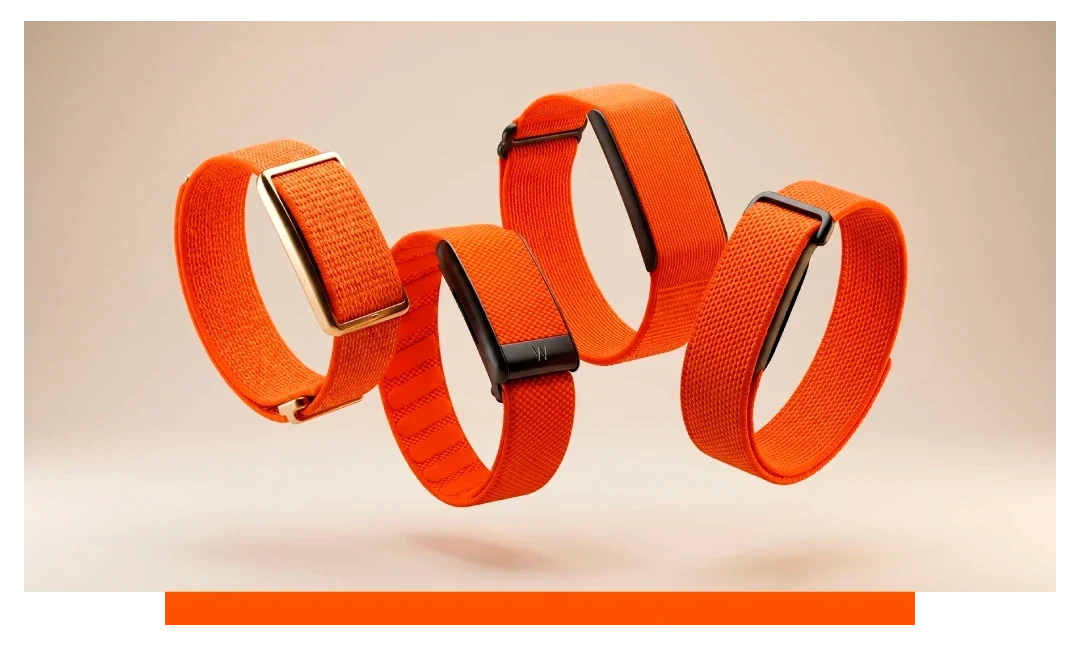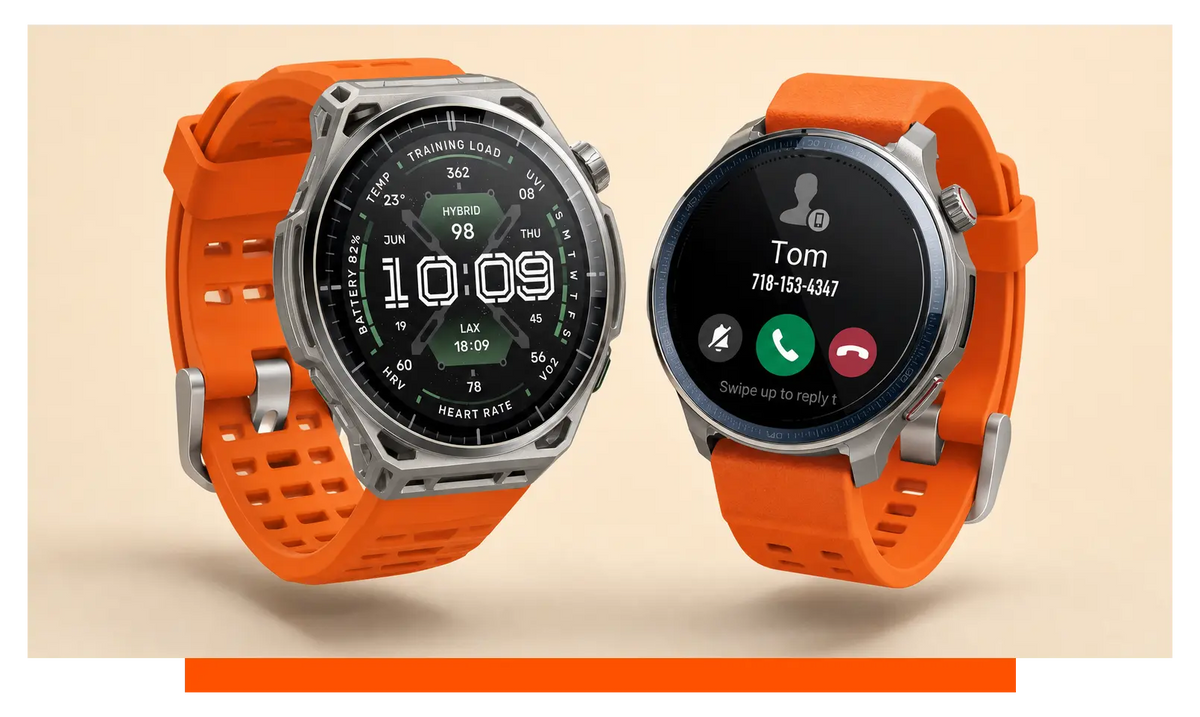
The Amazfit Balance 3 is the better buy if you will use its brighter display, preloaded maps and longer GPS endurance outdoors. The Amazfit Balance 2 is the smarter everyday watch when lower weight and a less imposing case matter more. The deciding factor is simple: outdoor upgrades versus all-day, all-night wearability.
On this page
- The short version
- Amazfit Balance 3 vs Amazfit Balance 2 specifications compared
- Will the Amazfit Balance 3 feel too big?
- Price and value
- Amazfit Balance 3 vs Balance 2: GPS battery life and navigation
- Amazfit Balance 3 vs Balance 2: display
- Software, performance and music storage
- Materials and controls
- Amazfit Balance 3 vs Balance 2: everyday battery life
- Health and sleep tracking
- Sport tracking and water resistance
- Smartwatch features
- Strap fit and everyday comfort
- Where Amazfit Balance 3 is better
- Where Amazfit Balance 2 is better
- Who should choose which
- Frequently asked questions
The short version
- Choose the Amazfit Balance 3 for outdoor use: its brighter screen, preloaded contour maps and longer GPS claims are meaningful upgrades for hiking, navigation and long training days.
- Choose the Amazfit Balance 2 for easier daily wear: its smaller case and lower weight make it less imposing for work, sleep tracking and ordinary gym sessions.
- Everyday battery is a draw: both watches carry the same typical and heavy-use claims, so the Balance 3 mainly pulls ahead when GPS remains active for a long time.
- Core health hardware is also a draw: both use the same BioTracker sensor and support heart-rate and sleep tracking.
- The Balance 2 costs less: the Amazfit Balance 3 was listed at £369.90, while the Amazfit Balance 2 was listed at £299 at the time of writing.
The decision comes down to whether the Balance 3’s outdoor tools will improve your actual training, or whether the Balance 2’s easier fit will benefit you every hour you wear it.
Amazfit Balance 3 vs Amazfit Balance 2 specifications compared
| Specification | Amazfit Balance 3 | Amazfit Balance 2 |
|---|---|---|
| Case dimensions | 51.4 x 51.4mm | 47.4 x 47.4 x 12.3mm |
| Weight | 62g stainless steel; 55g titanium | 43g |
| Price at the time of writing | £369.90 | £299 |
| GPS battery life | Up to 41 hours / up to 84 hours | Up to 33 hours / up to 67 hours |
| Navigation and maps | Preloaded full-colour contour maps | Free downloadable maps |
| Display brightness | Up to 3,000 nits | Up to 2,000 nits |
| Storage | 64GB | 32GB |
| Software | Zepp OS 6 | Zepp OS 5 |
| Case material | Stainless steel or Grade 5 titanium | Aluminium alloy frame; fibre-reinforced polymer case |
| Controls | 4 | 2 |
| Sports modes | 180+ | 170+ |
| Display | 1.5" AMOLED | 1.5" AMOLED |
| Display resolution | 480x480 | 480x480 |
| Display protection | Sapphire glass | Sapphire glass |
| GPS positioning | Dual-band; 6 satellite systems | Dual-band; 6 satellite systems |
| Typical battery life | Up to 21 days | Up to 21 days |
| Heavy-use battery life | Up to 10 days | Up to 10 days |
| Water resistance | 10 ATM | 10 ATM |
| Health sensor | BioTracker 6.0; 5PD + 2LED | BioTracker 6.0; 5PD + 2LED |
| Bluetooth calls | Yes | Yes |
The central trade is clear: the Balance 3 turns its extra wrist presence into better outdoor hardware, while the Balance 2 preserves the shared everyday essentials in a lighter case.
Will the Amazfit Balance 3 feel too big?
The Balance 3 is likely to feel substantially more imposing than the Balance 2, especially on a smaller wrist or when worn overnight. Its case measures 51.4 x 51.4mm and weighs 62g in stainless steel or 55g in titanium. The Balance 2 measures 47.4 x 47.4 x 12.3mm and weighs 43g.
That difference matters more than it may appear on a product page. A large face can be helpful when you are following a map or checking training fields without breaking stride, but it also covers more of your wrist and is harder to forget under a shirt cuff. The titanium Balance 3 reduces the weight burden, yet it does not reduce the case footprint.
The Balance 2 is therefore the safer fit for sleep tracking, office wear and people who dislike feeling a watch move during strength training. It still has the same display size as the Balance 3, so you are not giving up glanceable screen space simply to gain a more compact outer case.
On your wrist, the Balance 3 feels like dedicated outdoor equipment; the Balance 2 is easier to treat as an everyday watch.
Price and value
The Balance 2 offers better value for general health tracking, gym work and daily wear, while the Balance 3 earns its premium through outdoor upgrades. At the time of writing, the Amazfit Balance 3 was listed at £369.90 and the Amazfit Balance 2 at £299.
The less expensive watch does not lose the shared AMOLED panel size, resolution, sapphire protection, core health sensor, standard battery claims or dual-band positioning. That makes the Balance 2 particularly persuasive if your routine is built around walks, gym sessions, sleep and general wellbeing.
The Balance 3 becomes easier to justify if you regularly navigate outdoors, record long GPS activities, train in harsh sunlight or want more room for music. Those are practical benefits, not cosmetic changes. Even so, paying for them makes little sense if most of your activity starts and ends near home.
What you notice after buying is that the Balance 2 saves money without weakening ordinary tracking, while the Balance 3 repays its premium mainly away from the gym.
Amazfit Balance 3 vs Balance 2: GPS battery life and navigation
The Balance 3 is the stronger watch for long GPS sessions and regular map use. In the watches’ most accurate tracking modes, Amazfit claims up to 41 hours for the Balance 3 and up to 33 hours for the Balance 2. Their paired extended GPS claims rise to 84 hours and 67 hours respectively.
Both use dual-band positioning across 6 satellite systems, so the Balance 2 still has serious location hardware. For runners and walkers doing ordinary sessions, the shared positioning setup may matter more than the extra endurance. The Balance 3’s advantage appears when GPS stays active for a long hike, an endurance event or several travel days between charges.
Mapping is the other split. The Balance 3 comes with full-colour contour maps preloaded, making it the more convenient choice when routes and terrain are part of the activity. The Balance 2 provides free downloadable maps, which remain useful but require more preparation before leaving.
If outdoor navigation is your main priority, you may also want to see how more rugged watches compare in our Amazfit T-Rex Ultra 2 vs Garmin Fenix 8 comparison. For occasional park walks, though, the Balance 2 is already well equipped.
Out on a long route, the Balance 3 gives you more breathing room before charging and puts useful terrain detail on your wrist with less preparation.
Amazfit Balance 3 vs Balance 2: display
The Balance 3 has the more sunlight-friendly display, but the two watches are equally detailed and equally spacious. Both use a 1.5" AMOLED panel with a 480x480 resolution and sapphire-glass protection.
Brightness is the meaningful difference. The Balance 3 reaches up to 3,000 nits, compared with up to 2,000 nits for the Balance 2. The brighter panel is most useful in direct summer sun, on open water or when you need to read a map quickly without shading the screen.
Indoors, during sleep tracking and under typical overcast conditions, that advantage becomes much less decisive. The Balance 2 already provides the same screen area, resolution and hard-wearing sapphire surface. Buyers choosing the lighter watch are not being pushed onto a smaller or lower-resolution panel.
In practice, the Balance 3 is easier to glance at in strong daylight; elsewhere, the displays should feel far more alike than different.
Software, performance and music storage
The Balance 3 has the newer software platform and more storage, making it the better choice for buyers who keep a watch for a long time or carry plenty of offline music. It runs Zepp OS 6 and includes 64GB of storage, while the Balance 2 runs Zepp OS 5 and has 32GB.
The newer platform gives the Balance 3 the cleaner support-runway argument. If you enjoy new watch features and want the current software experience from day one, that matters. It is less compelling if you use your watch mainly to start workouts, read notifications and review health trends in the Zepp app.
Storage is more tangible. The Balance 3 gives frequent travellers and phone-free runners more room for music and other stored content. The Balance 2 still has useful local capacity, but it suits a more selective offline library.
There is no established processor figure here that should decide the comparison. The buying difference is the named software generation and available storage, not an unsupported claim about speed.
Day to day, the Balance 3 leaves more room for offline content and starts from the newer software base; the Balance 2 covers simpler routines without making storage the centre of the experience.
Materials and controls
The Balance 3 offers the more premium material choices and more physical controls, whereas the Balance 2 prioritises low weight. The newer watch is available in stainless steel or Grade 5 titanium and has 4 controls. The Balance 2 uses an aluminium alloy frame with a fibre-reinforced polymer case and has 2 controls.
Physical buttons become valuable when rain, sweat or gloves make a touchscreen awkward. More controls can also shorten the path to common outdoor functions. For ordinary notification checks and gym workouts, fewer controls are unlikely to be the deciding factor.
Material choice feeds directly into fit. Titanium lowers the Balance 3’s weight compared with its stainless-steel version, but the Balance 2 remains lighter. Stainless steel may suit buyers who want a substantial workwear look; the Balance 2’s construction is the practical option for people who would rather forget the watch is there.
The difference you feel is between the Balance 3’s substantial, tool-like build and the Balance 2’s quieter presence during a full day.
Amazfit Balance 3 vs Balance 2: everyday battery life
Everyday battery life is not a reason to choose between these watches. Amazfit rates both for up to 21 days of typical use and up to 10 days of heavy use.
Real endurance will still move with screen brightness, call use, health settings and workout frequency, but neither model holds a stated advantage under the matching everyday-use claims. This is important because the Balance 3’s larger case does not translate into a longer quoted general-use figure.
The split only becomes clear with continuous GPS. If your week contains short gym sessions, walks and health tracking, both watches should fit a similar charging routine. Long outdoor recordings are where the Balance 3 creates extra headroom.
Away from prolonged GPS use, you would expect to reach for the charger on broadly the same schedule.
Health and sleep tracking
Health tracking is effectively level because both watches use the same BioTracker 6.0 sensor with 5PD + 2LED. Both support heart-rate monitoring and sleep tracking, so the Balance 3 does not gain its strongest case from everyday wellness measurements.
Fit may have more influence on your experience than the shared sensor. A watch needs to sit consistently against your skin, and comfort matters if you intend to keep it on all night. The lighter Balance 2 is likely to be easier for more people to tolerate during sleep, particularly if they already find large watches distracting.
The Balance 3 can still track the same broad daily picture while adding its outdoor strengths. Choose it if those strengths matter and its larger case remains comfortable. Do not choose it solely because you expect a different generation of optical health hardware.
For health-focused buyers, the data foundation is shared; the noticeable difference is which case you are happier to keep on your wrist overnight.
Sport tracking and water resistance
The Balance 3 has the broader sports list, but the Balance 2 already covers a wide range of training and matches its water-resistance rating. The Balance 3 offers more than 180 sports modes, compared with more than 170 on the Balance 2, while both are rated to 10 ATM.
A longer mode list is useful only when it includes an activity you actually perform. For gym sessions, running, walking and common pool work, the Balance 2’s list is already extensive. The Balance 3’s stronger argument remains the package around outdoor sport: brighter visibility, preloaded contour maps and longer GPS endurance.
Both watches can accompany swimming and demanding wet-weather training within their supported activities. Buyers with a specialised water-sport requirement should still check the exact mode and usage guidance rather than treating the resistance rating as a universal permission slip.
During mainstream training, both feel well covered; the Balance 3 pulls away when sport becomes longer, more navigational or more specialised.
Smartwatch features
Neither watch has a decisive advantage for Bluetooth calling and everyday wrist notifications. Both support Bluetooth calls, leaving software generation, storage and fit to carry more weight in the choice.
The Balance 3’s newer Zepp OS platform will appeal if you want the latest interface and the longer remaining runway that normally comes with buying the current generation. The Balance 2 remains a very attractive alternative for buyers whose smartwatch use is mostly checking alerts, controlling daily functions and recording workouts.
Your phone also shapes the experience. Both watches work across the main mobile platforms, although specific reply functions and minimum software requirements differ; those points are covered in the questions below.
For calls and alerts, you would notice little reason to upgrade; the Balance 3 feels more future-facing chiefly because of its newer software base.
Strap fit and everyday comfort
Both watches use the same 22mm quick-release fitting, so strap availability does not favour either model. Our catalogue fitment data confirms that Amazfit Balance 3 straps and Amazfit Balance 2 straps share that fitting.
That gives existing Balance 2 owners a useful advantage: compatible straps can move across if you upgrade. It also means you can address comfort without relying on the supplied band. We stock silicone, nylon, leather, milanese and metal options for both watches.
Material should follow the way you wear the watch. Silicone is practical for sweat and swimming; nylon can reduce the bulky feeling of a large case and offers fine adjustment for sleep. Leather or milanese can make either model easier to pair with workwear, while metal adds weight and is less likely to soften the Balance 3’s substantial feel.
A strap cannot shrink the Balance 3’s case, but a light, closely adjusted band can stop it shifting during runs and overnight tracking. Conversely, a heavier bracelet can make the already light Balance 2 feel more formal without losing its smaller footprint.
Once fitted, both offer the same strap freedom, but the Balance 3 benefits more from a light band that keeps its larger case stable.
Where Amazfit Balance 3 is better
The Balance 3 wins where outdoor visibility, navigation and endurance matter.
- Long GPS sessions: up to 41 hours in the most accurate mode, versus up to 33 hours for the Balance 2.
- Extended GPS use: up to 84 hours, versus up to 67 hours.
- Navigation: preloaded full-colour contour maps instead of maps that need downloading.
- Bright conditions: up to 3,000 nits rather than up to 2,000 nits.
- Offline storage: 64GB instead of 32GB.
- Current software: Zepp OS 6 rather than Zepp OS 5.
- Physical operation: 4 controls rather than 2.
Where Amazfit Balance 2 is better
The Balance 2 wins on comfort, discretion and value.
- Lower wrist weight: 43g rather than 55g or 62g, depending on the Balance 3 material.
- Smaller footprint: 47.4 x 47.4mm rather than 51.4 x 51.4mm.
- Lower price: £299 rather than £369.90 at the time of writing.
- Shared everyday endurance: the same claim of up to 21 days typical use and up to 10 days heavy use.
- Shared display fundamentals: the same 1.5" AMOLED size, 480x480 resolution and sapphire protection.
- Shared health hardware: the same BioTracker 6.0 sensor with 5PD + 2LED.
Who should choose which
Choose according to the activities you really do and the amount of watch you enjoy wearing, not simply which model is newer.
- Choose the Amazfit Balance 3 if you hike, travel or train outdoors for long periods and will benefit from preloaded contour maps, extra GPS endurance and the brighter display.
- Choose the Amazfit Balance 3 if you carry offline music and want 64GB of storage alongside the newer Zepp OS 6 platform.
- Choose the Amazfit Balance 3 if you prefer physical controls for wet, sweaty or gloved sessions and accept the larger case.
- Choose the Amazfit Balance 2 if you mostly track gym sessions, walks, sleep and general health because its shared fundamentals make the outdoor premium unnecessary.
- Choose the Amazfit Balance 2 if you have a smaller wrist or wear your watch overnight and want the lighter, less imposing option.
- Choose the Amazfit Balance 2 if value matters most and you do not regularly depend on maps or very long GPS recording.
The Balance 3 is the outdoor upgrade; the Balance 2 is the watch most buyers will find easier to live with everywhere else.
Frequently asked questions
Do both watches work equally well with an iPhone?
Short answer: Both work with an iPhone for Bluetooth calls and notifications, but Balance 3 requires iOS 17.0 or above while Balance 2 supports iOS 15.0 and above.
Can I answer calls and reply to messages from either watch?
Short answer: Both watches support Bluetooth calls and show call, SMS and app notifications. Message quick replies are Android-only on both, so iPhone users cannot reply from either watch.
Can I connect a heart-rate strap, cycling sensor or power meter?
Short answer: Yes, when the accessory uses BLE. Both support heart-rate belts, cycling power meters, cycling speedometers and cycling cadence meters; Balance 2 also supports Stryd footpods.
Do both watches support Strava and TrainingPeaks?
Short answer: Yes. Both sync workout data through the Zepp app to Strava and TrainingPeaks, with Balance 2 listing TrainingPeaks via Terra.
Will the Balance 2 keep receiving useful software updates?
Short answer: Yes. After Balance 3 was unveiled on June 2, 2026, Balance 2 received updates in June, July and August 2026, including Zepp OS 6, HybridCharge™, pool-swimming Manual Rest and map download management.